
Handmade Olive Oil Soap Bars: A Simple Guide
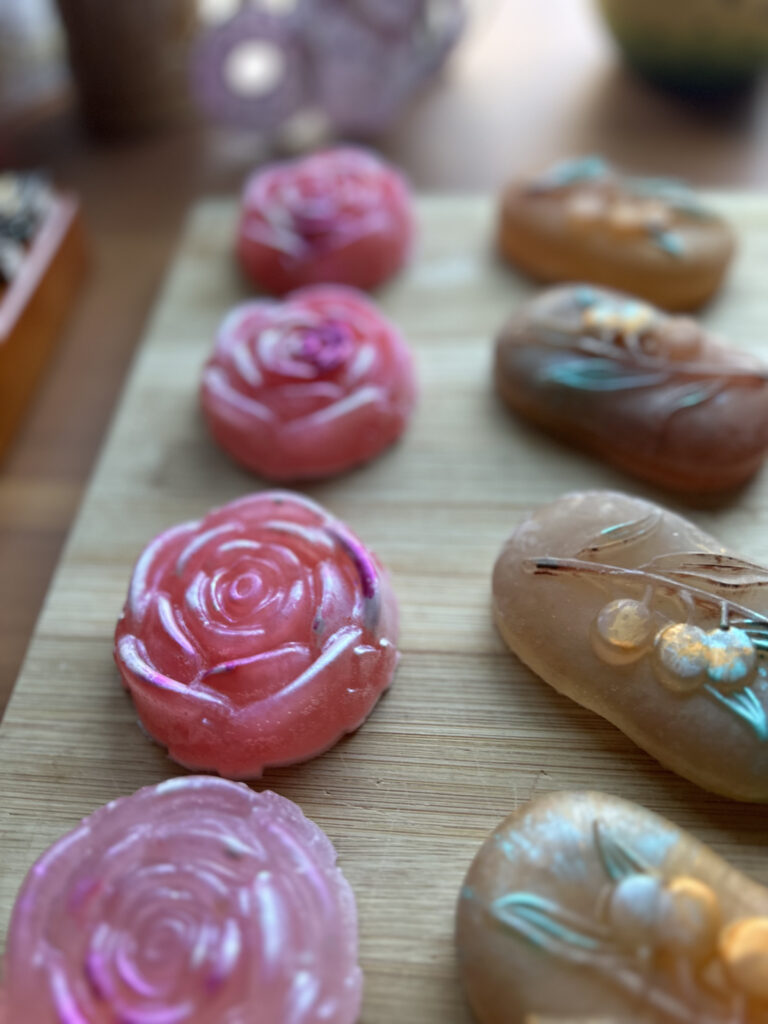
A good bar of soap is one of the simplest things you can put on your skin. Ours has five ingredients in its plainest form. This guide covers what those ingredients do, why the word “lye” should not scare you, and how to make a bar last.
What real soap is
Soap is what you get when oils meet lye. On our label the lye is listed as sodium hydroxide, with a note that it is the saponifying agent. That is the technical name for the reaction that turns oil into soap. Once the oils and lye have fully reacted, what is left is soap and natural glycerin. No lye remains in the finished bar.
The oils we use
- Organic extra virgin olive oil makes a mild, conditioning bar that is kind to skin.
- Organic extra virgin coconut oil brings the bubbles and the cleansing power.
- Castor oil makes the lather creamy and helps it hold.
Add distilled water and the lye, and that is the whole unscented bar.
Scented or unscented
The scented bars add two things: a pair of essential oils and a touch of mica powder for color.
- Rose Earth: rose geranium and patchouli.
- Cozy Calm: Roman chamomile and frankincense.
- Sweet Bloom: sweet orange and neroli.
- Unscented: just oils, water and lye. A good choice for sensitive skin or for anyone who does not want fragrance.
How to make a bar last
Handmade soap is softer than factory soap because it keeps its natural glycerin. Water is what wears it down, so the goal is to let it dry between uses.
- Keep it on a dish that drains, not in a puddle.
- Keep it out of the direct spray of the shower.
- Cut the bar in half and use one piece at a time.
Who it is for
It works as a hand soap at the sink and as a body bar in the shower. Each bar is handcrafted, so small differences in shape and color from bar to bar are normal.
See our Soap Bar and choose your scent.
More from the blog
 The Secret Life of Your Skin: 8 Surprising FactsYour skin is your largest organ. It renews itself about once a month and is home to a whole community of tiny life. Here are eight surprising facts about your skin, and what each one means for your routine.Read article
 Tooth Powder 101: How to Brush With a Mineral PowderWhat tooth powder is, what each ingredient in our Mineral Refresh blend does, from xylitol to neem, and how to brush with it.Read article
 Castile Hair and Body Wash: One Bottle, Head to ToeWhat castile soap is, what else is in our hair and body wash, and tips for using one gentle wash on both hair and skin.Read article